How AI name generators are reshaping brands and triggering trademark clashes
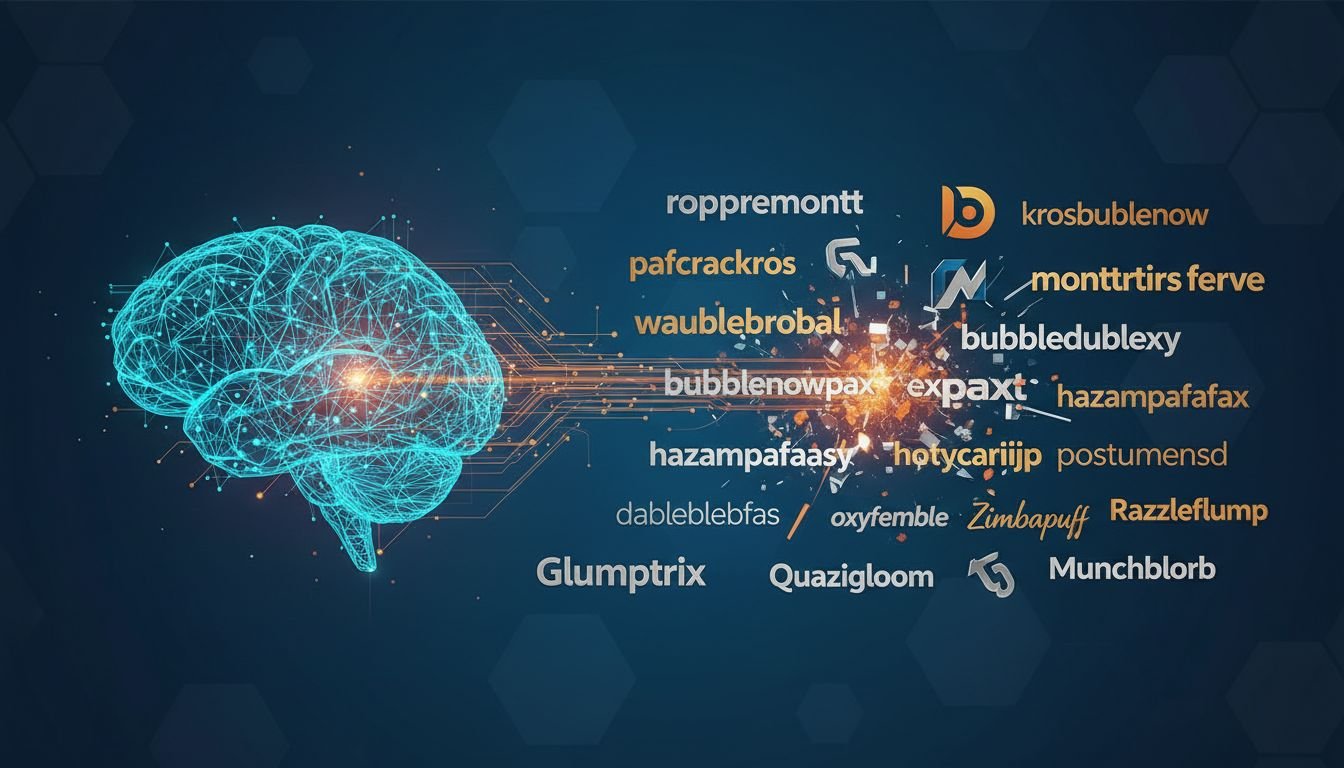
AI name generators were supposed to make branding faster, slicker, and maybe a little less painful than the classic founders-in-a-Notion-doc routine. Type in a few prompts, ask for something futuristic but friendly, maybe “minimal but premium,” and out comes a stream of shiny invented words that sound ready for a seed round and a launch thread. The catch is that the same tools making naming easier are also making brands look weirdly similar to one another.
That is where the current mess begins. As AI name generators flood startups, creator-led businesses, and software launches with short, punchy, “brandable” names, trademark collisions are becoming less like rare legal drama and more like an inevitable stage of the branding funnel. According to WIPO guidance and 2025 dispute materials, availability is not automatic, domain conflicts can still bite, and a name that feels original can already be sitting in a trademark register somewhere important.
The great AI naming boom
There is a reason these tools took off so quickly. For marketers and founders under pressure to ship, AI naming tools feel like a cheat code. They generate dozens or hundreds of options in minutes, often tuned to the exact aesthetic businesses want: sleek, modern, memorable, vaguely intelligent, and not too attached to any obvious dictionary meaning.
That speed fits the internet’s current rhythm. Brands now emerge in public, often before the product is fully mature, and social handles, domains, app-store listings, and creator partnerships need to be lined up fast. In that environment, AI-generated naming is not just convenient. It is culturally aligned with the startup and social media obsession with instant polish.
But the branding logic has a darkly funny side. When everyone asks a model for a name that is short, pronounceable, invented, and premium-sounding, everyone gets pushed toward the same pool of phonetics and structures. The result is not infinite originality. It is convergence dressed up as creativity.
Why so many AI-generated names crash into trademarks
Trademark lawyers have been warning about this for a simple reason: the easiest names for AI to generate are often the exact kinds of names other companies already wanted. Short coined words, soft consonants, clean vowels, and abstract tech vibes are not some untouched frontier. They are the most crowded real estate in modern branding.
WIPO’s trademark resources make the boring but essential point that founders cannot assume a generated name is available just because it looks invented. Users still need to search relevant national and international registers, and they also need to think about domain-name conflicts. A name can feel made up and still be dangerously close to an existing mark in sound, spelling, commercial impression, or online use.
That is the trap. AI generators are good at producing names that look plausibly ownable. They are not good at guaranteeing legal safety. So businesses end up with something that feels distinctive in a brainstorm, only to discover it is already spoken for in the places that actually matter: trademark databases, live markets, and domain registrations.
The lawsuits are not hypothetical anymore
If anyone still thinks this is an abstract legal concern, 2025 has been busy correcting that fantasy. Reuters reported that Perplexity AI was sued by a software company over alleged trademark infringement tied to the “Perplexity” name. That fight put a spotlight on how AI-era brand building can run straight into older trademark claims, even when the startup has massive visibility and momentum.
OpenAI also won a trademark case in 2025 over the use of “Open AI” in commerce, with Reuters reporting that a federal judge in California found a Silicon Valley entrepreneur violated OpenAI’s trademark rights by using the name. That matters because it undercuts a popular assumption in tech branding: that descriptive-sounding AI language is too generic to be protectable. Apparently, not so fast.
Then there is xAI and the “Grok” dispute, reported by WIRED. Another AI startup had already applied to trademark “Grok” before xAI launched its chatbot, and the USPTO reportedly raised confusion concerns with other related marks. It is a tidy example of what happens when high-speed product launches collide with a trademark ecosystem that was already crowded before the latest AI hype cycle arrived.
Domains are now part of the trademark battlefield
Brand clashes are no longer limited to product packaging, app icons, or splashy launch videos. WIPO’s 2025 domain-name dispute roundup shows that naming collisions are also happening in online infrastructure, especially around “brandable” names and AI-adjacent web addresses such as .ai domains. In other words, the fight starts before the marketing campaign is even warmed up.
WIPO’s decisions and guidance make another important point: adding “AI” to a mark, or grabbing a .ai domain, does not magically make confusion disappear. A mark plus a descriptive term can still be considered confusingly similar, and panels will examine whether a registrant was independently choosing a coined term or targeting an established brand owner. The suffix does not save you from the substance.
That matters because many founders treat domain registration as a kind of informal clearance signal. If the dot-com is gone but the .ai is available, they may assume they have found a clever workaround. WIPO’s 2025 materials suggest the opposite: domain strategy can become evidence in a dispute, especially when the chosen name already resembles someone else’s mark.
Why adding “AI” is not the clever legal hack people think it is
There is a very online habit of taking an existing term, bolting “AI” onto it, and calling the result a new brand. It feels modern, searchable, and conveniently on-trend. Legally, though, that move can be shaky. WIPO guidance indicates that descriptive additions do not necessarily prevent confusing similarity, whether in trademarks or domain disputes.
This is where branding culture and trademark law have a bit of a toxic situationship. Marketers love familiar signals because they help audiences instantly understand what a product does. Trademark law, meanwhile, asks whether consumers may think the new name is connected to an existing brand. So the exact naming move that helps with positioning can increase legal risk.
The same issue shows up when companies try to claim broad, obvious AI-era terms. Reuters-reported coverage noted that Tesla’s attempt to register “Robotaxi” was refused as too generic, while “Cybercab” filings ran into conflicts with other “Cyber” marks. The lesson is not subtle: obvious futuristic language is either too generic to own, too close to someone else, or both.
AI is speeding up brand creation faster than clearance can keep up
WIPO’s recent trademark and domain resources point to a structural problem. AI has compressed the timeline for ideation, naming, logo generation, handle hunting, and launch prep into a process that can happen in a single afternoon. Legal clearance has not undergone the same glow-up. It still requires searches, review, jurisdictional judgment, and actual human verification.
That mismatch increases the odds of overlap with earlier marks. Teams get emotionally attached to names before anyone does the uncomfortable checking. By the time counsel flags a conflict, the brand may already be in pitch decks, teaser campaigns, influencer briefs, and product UI. Suddenly a naming problem is also a sunk-cost problem.
And because AI tools can produce an avalanche of “available-looking” options, they create a false sense of abundance. But abundance at the ideation layer does not equal abundance in the legal layer. WIPO’s Global Brand Database remains a useful starting point, yet WIPO also notes that users should check national and regional registers too. The internet may feel borderless; trademark risk is not.
Even enforcement is getting messier with AI in the loop
The AI complication does not stop once a conflict appears. WIPO explicitly warned in 2025 about AI-generated pleadings in UDRP cases, saying such tools “may complement but are not a substitute for professional advice.” That is a striking warning, because it shows the same automation logic affecting both naming and the cleanup operation after things go wrong.
For brand owners, that means AI-assisted workflows can introduce errors at multiple points: generating a risky name, performing shallow clearance, filing overconfident enforcement claims, or drafting sloppy domain complaints. If humans are not checking the facts, the technology can accelerate bad decisions just as efficiently as good ones.
It is also a reminder that not every collision involves obvious bad faith. WIPO’s recent domain-name cases show that panels still look closely at knowledge, targeting, and use. But AI-generated names can appear so convincingly invented that founders may adopt them without realizing they are stepping into someone else’s legal territory. Intent matters, but it does not erase consequences.
What smart brands should actually do now
The practical takeaway is refreshingly unglamorous. Treat AI naming tools as ideation engines, not clearance tools. Use them to widen the creative field, test tonal directions, and surface surprising combinations. Then do the homework that no chatbot can finish for you: trademark searches, domain review, jurisdiction checks, and a real legal assessment of confusion risk.
For marketers and brand managers, this also means changing the workflow. Do not wait until the team has fallen in love with a generated name before checking it. Build clearance into the early shortlist stage. If a name only survives because no looked too hard, it is not a strong brand asset. It is a delayed expense.
And maybe, just maybe, brands need to resist the current obsession with hyper-compressed, vaguely sci-fi invented words that every AI tool keeps spitting out. Distinctiveness is still valuable, but sameness wearing a chrome finish is not the same thing. In a crowded naming market, the coolest option is not always the most defensible one.
That is the awkward truth underneath the AI branding boom. These systems are genuinely useful, and they absolutely can help teams move faster. But they are also reshaping the naming landscape in a way that pushes different companies toward the same aesthetic, the same language patterns, and, too often, the same legal trouble.
So yes, generate away. Workshop the prompts. Chase the perfect futuristic syllable. Just do not confuse creative velocity with trademark safety. The 2025 record from WIPO, Reuters, and recent disputes makes the point pretty clearly: the machine can suggest a name, but it cannot promise you get to keep it.